

About Ora et Labora Advisory
Many organisations don't struggle because they lack ideas, but because the gap between strategy and execution lacks the right approach to close it. Organisations often deploy outdated approaches to solving current problems.
Growth is often constrained not by opportunity but by fragmented processes, weak commercial discipline, and a lack of structured execution frameworks.
As a result, organisations frequently focus on activity rather than outcomes, without the operating discipline required to scale, capture revenue effectively, and build resilient, high-quality businesses. These are structural issues organisations face, and they can be resolved through pragmatism and frameworks that align with long-term business results, organisational culture, and execution discipline.
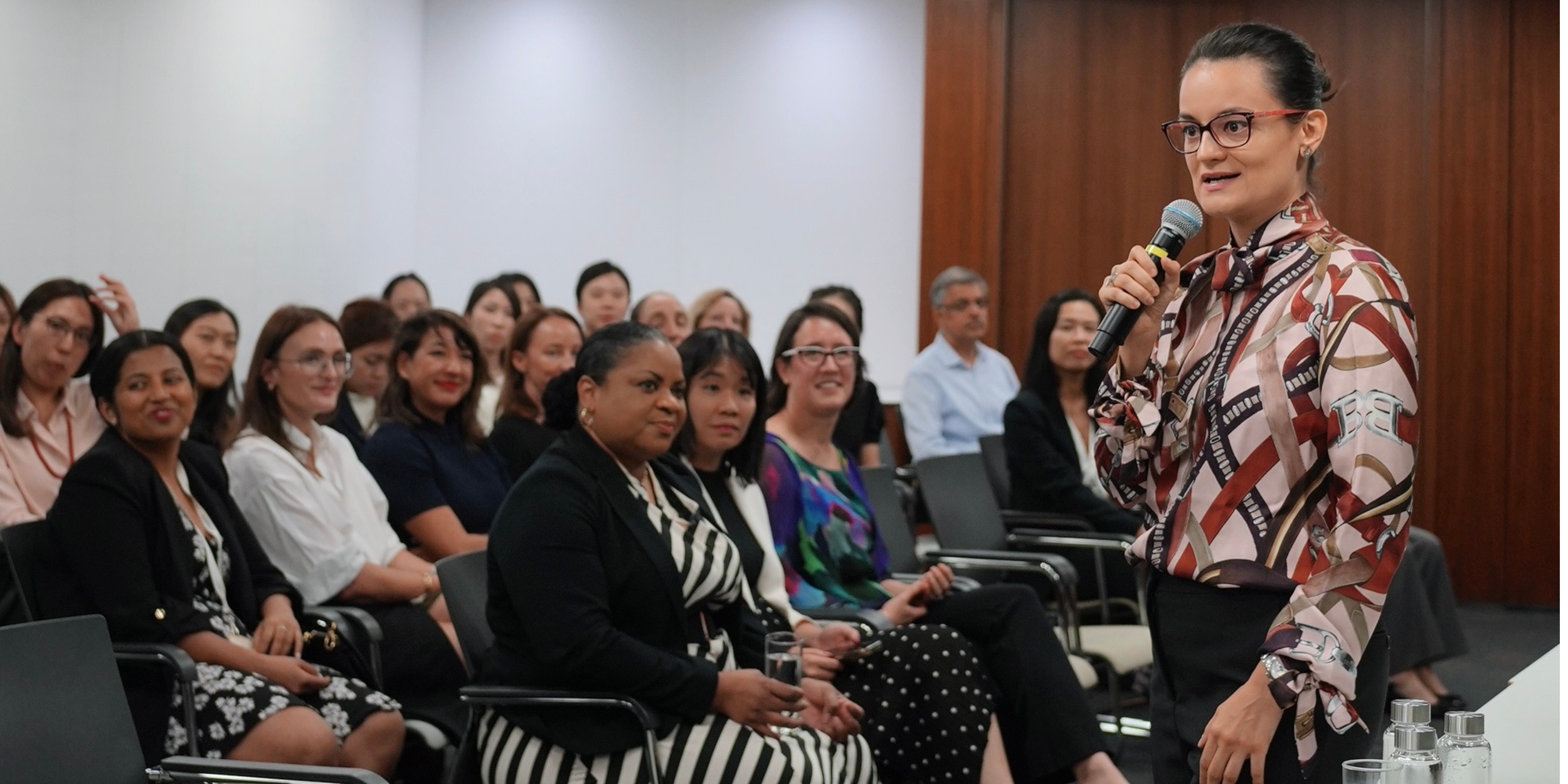
Ora et Labora Advisory was established by Isabelle Mustapic, a finance and strategic execution leader with over 20 years of experience across APAC and EMEA. She has worked at ABN AMRO, Deutsche Bank, and Bank of America in Zurich, London, Hong Kong, and Mauritius, with over 18 years in revenue-generating, execution-critical roles. Her work has consistently focused on driving and owning commercial outcomes, executing complex transactions, and closing complex cross-border strategic initiatives, including large-scale divestments and syndicated loan transactions.
Throughout her career, she has consistently delivered on:
Revenue generation and commercial discipline
Execution of complex, cross-border transactions
Operating model design and optimisation
Delivery of large-scale divestments
In recent years, this work has been extended into advisory, strategic consulting, and fractional leadership mandates across both institutional and resource-constrained environments, including financial ecosystems, associations, and non-profit organisations, with a focus on stabilising organisations, reducing risk exposure, and building scalable operating frameworks. Isabelle has over 13 years of experience in coaching and mentoring professionals across finance and adjacent industries. Born in Croatia, Isabelle is a Swiss-British citizen and Hong Kong Permanent Resident. She began her banking career in Zurich and forged her path into London, Hong Kong and Mauritius. Today, Isabelle runs her practice across APAC and EMEA.
Isabelle has been selected as one of the “Women to Watch” by the 30% Club Hong Kong and The Women’s Foundation Hong Kong, she is the inaugural Asia Ambassador for the Swiss Fintech Ladies and former Co-Chair at Women in Finance Asia.
Woman to Watch (30% Club)
|
Co-Chair Women in Finance Asia
|
Swiss Fintech Ladies Asia Ambassador
|
Woman to Watch (30% Club) | Co-Chair Women in Finance Asia | Swiss Fintech Ladies Asia Ambassador |
The Origins of St. Benedict’s “Ora et Labora” is the Tradition of Discipline, Influence and Stewardship
Philosophy
Benedict of Nursia (c. 480–547 AD) is not only regarded as the father of Western monasticism, but also as one of the foundational architects of institutional organisation and disciplined labour in medieval Europe. Born in Italy during a period of political fragmentation following the decline of the Western Roman Empire, he withdrew from urban life in search of spiritual discipline, structure, and clarity.
What began as a solitary life of prayer gradually evolved into something far more systemic and enduring. Benedict attracted followers and eventually established a monastic community at Monte Cassino, which became the model for monastic life across Europe through The Rule of St. Benedict: Ora et Labora (“Pray and Work”) — A philosophy centred on discipline, stewardship, continuity, and purposeful labour.
St. Benedict created one of the earliest scalable operating systems in Europe
Benedict’s Rule was notable for its pragmatism, structure, and sustainability. It created a framework that could endure, scale, and be replicated across regions and generations. Over time, Benedictine monasteries evolved into centres of organisation, learning, economic activity, and resource stewardship throughout early medieval Europe. They played a significant role in preserving knowledge, managing land and assets, supporting local economies, providing hospitality and care, and contributing to regional stability during periods of political and economic uncertainty.
Under the Rule of St. Benedict, governance frameworks and operating models were developed alongside behavioural codes, leadership principles, labour systems, and processes designed to ensure continuity and institutional resilience. Monasteries operating under Benedictine principles became highly organised, economically productive, and largely self-sustaining institutions.
Benedictines became major builders of medieval Europe
Benedictine monasteries were not passive spiritual retreats. The monastic communities that ran them became agricultural innovators, infrastructure developers, educators, manufacturers, and administrators. They cultivated land, built irrigation systems, developed vineyards, preserved manuscripts, organised logistics, and managed complex estates and resources. In many regions, monasteries functioned as stable economic and administrative centres during periods of broader political instability.The first organisational strategists

The Rule of St. Benedict has also been linked to academically supported theories of leadership and organisational governance, including Benedictine Leadership by William J. Hisker and Michael J. Urick, The Rule of Saint Benedict and Corporate Management published in the Journal of Global Responsibility, and Karin Rost’s The Corporate Governance of Benedictine Abbeys (University of Zurich).
The Rule of St. Benedict addressed themes that remain central to organisational management and leadership to this day, including accountability, delegation, leadership conduct, operational discipline, conflict management, succession planning, time management, stewardship, and the preservation of intellectual capital.